Abstract:
The surface of painting on canvas has been the focal point of fine art for centuries; however, modern artists are faced with a complex choice between a painting surface that is printed on paper and a stretched canvas. While both have the same material composition on their surfaces, their long-term performance, efficiency, and cost are vastly different.
This article provides a comprehensive, industry-oriented analysis of the differences between canvas boards and stretched canvases, which artists, educators, retailers, and manufacturers can use to determine which option is most beneficial for specific artistic, commercial, and professional endeavors.
Introduction: Why the Canvas Support Matters More Than Most Artists Think
When artists contrast the canvas board’s price and the cost of a stretched version, the discussion typically focuses on the portability or price of the latter. However, from a professional and historical perspective, the foundation of a painting’s support has a greater impact on the painting than simply its convenience.
It has an effect on the behavior of paint during application, the aging of artworks over time, and the way they are stored, transported, and displayed.
The Canvas Board and Stretched Canvas typically have a cotton or linen primary material that is primed with Gesso; however, they are fundamentally dissimilar.
Understanding these discrepancies is crucial to both artists and educators who want to choose classroom supplies, allies that want to assess the durability of products, and suppliers that want to market their products to specific demographics.
What Is a Canvas Board? Structural Overview and Composition
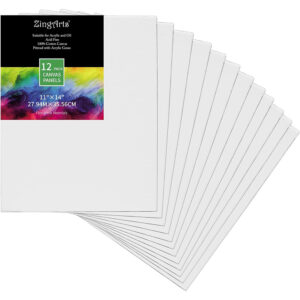
A canvas board is made up of a sheet of canvas that is mounted to a solid backing, which is typically done through adhesive bonding. The canvas is primed already, which creates a flat, stable surface that can be used to paint.
From a manufacturing perspective, canvas boards are intended to maximize efficiency and minimize costs. The solid support prevents warping during painting, while the thin profile facilitates easy assembly, storage, and transportation. These traits make canvas boards popular in educational organizations and large-volume production settings.
However, because the canvas is permanently connected to a solid substrate, the dynamic tension and flexibility of the material are lost. This difference is increasingly significant in professional and long-term applications.
What Is a Stretched Canvas? Construction and Material Behavior
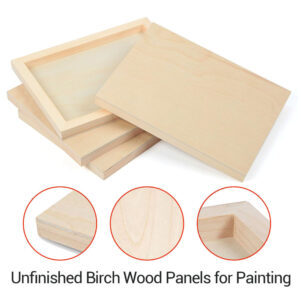
A fabric that is stretched over a wooden frame is called a stretchable canvas. This type of fabric is commonly used in the crafting of bags and other products. The canvas is connected to the back or sides of the frame, which creates a taut painting surface that is slightly malleable.
This structural stress facilitates the canvas’s ability to respond to pressure from brushes, which is important for expressive methods. Traditionally, stretched paper was the most common material used for oil painting because it combined strength and flexibility.
Stretched canvases are available in a variety of different depths, including traditional configurations and modern formats that are wrapped around the frame. These formats allow for a presentation that is frameless. This versatility is what makes it the most popular choice in professional fine art and commercial art markets.

Painting Performance: How Each Surface Affects Technique
- The interaction between brushes and paint, and the response to painting, are studied
One of the greatest discrepancies between canvas boards that are stored on their sides and those that are simply laid out is how they respond to painting. The Canvas Board has a solid, nonporous surface that resembles painting on a panel quite closely. This staleness benefits artists who focus on accuracy, such as those involved in detailed painting, controlled glazing, or artistic depictions.
Conversely, fabric that is stretchy offers a slight advantage under pressure. This elasticity increases the effectiveness of gestural painting and allows for more dramatic mark-making, especially in oil and acrylic art. Many accomplished artists enjoy this responsiveness, as it promotes dynamic methods and layered painting.
- Absorption and Behaviors at the ground
Bothcanvas boards and Extended canvases are typically coated with acrylic gesso; however, the way the ground interacts with paint is different. The solid support of the canvas board prevents micro-movement, which can lead to a quicker drying time and more consistent paint behavior.
Stretched canvases are prone to variations in absorption, particularly when subjected to heavy pressure or a lot of solvent; their marginal regions are particularly vulnerable. While imperceptible, these discrepancies are apparent to seasoned painters.
Durability and Longevity: Which Lasts Longer?
From a conservation perspective, stretchable canvas typically has a superior performance compared to regular canvas when properly cared for and maintained. Canvas boards, especially those that are backed with cardboard, are more likely to be damaged by moisture, migrate acid, and degrade over time.
Professional conservation literature has consistently documented that solid, non-replicable materials can adversely affect the longevity of artworks. Over time, humidity changes may cause the board to become warped or the adhesive to weaken, which would lead to delamination.
Stretched canvases, especially those made with materials that are free of acid and have a high-quality bar that supports them, have greater airflow and are more stable in terms of dimensions. While it isn’t impervious to environmental damage, it’s more susceptible to conservation, repair, and re-strike if necessary.
Cost Efficiency and Market Positioning
- Canvas Board: Evasive and Efficient
Canvas boards are significantly less expensive than regular canvases, which makes them ideal for:
Art students and those who begin.
Classroom and laboratory utilization
Practice research and initial findings
Large-scale production settings
Their low expense allows artists to experiment without the mental barrier of the cost of expensive materials.
- Stretched Canvas: Professionals and value-oriented
Stretched canvases have a higher cost of production because of the materials, labor, and transportation needed. However, this expense is reflective of its appropriateness for finished artwork that is intended for sale, exhibition, or long-term storage.
In stores that sell goods and businesses that seek to market their products, the stretchablecanvas is considered a high-end product that is typically distinguished by its weight, type of fiber, and the depth of its stretcher bar.
Presentation and Display Considerations
The presentation area is notable for its superior stretch. Gallery-wrapped paintings can be exhibited without being framed, in line with the modern presentation of art. The thickness and complexity of the stretched fabric contribute to its perceived value in the commercial art market.
Contrastingly, Canvas boards are designed to be displayed without framing or mounting. While this can be beneficial in some design situations, it adds an extra step and cost to artists who want to show or sell their art.
Canvas Board vs Stretched Canvas: Key Differences at a Glance
| Feature | Segeltuchtafel | Stretched Canvas |
| Structural support | Rigid board backing | Wooden stretcher frame |
| Surface tension | None | Moderate |
| Portability | High | Moderate |
| Kosten | Low | Medium to high |
| Langlebigkeit | Limited (depends on backing) | Superior with proper materials |
| Display options | Requires framing | Frame-free or framed |
| Best use cases | Practice, studies, education | Finished artwork, exhibitions |
Which Is Better for Different Types of Artists?
- Students and Novices
For those who are new to the hobby, the canvas board is typically more beneficial. Its accessibility, consistency during use, and simple storage make it ideal for educational experiments and skill development.
- Professional and Commercial Painters
Professional artists typically choose to display paintings on stretched canvases because of their longer lifespan, superior presentation, and compatibility with standard gallery rules. For paintings intended for sale, it’s commonly considered better to use stretched canvas.
- Mixed Media and Experimental Practice
Artists who utilize collage as their primary medium, or who combine painting with other media, may favor the canvas board for its consistency, which supports additional components without the surface’s movement.
Industry Perspective: Manufacturing and Supply Chain Considerations
From a manufacturing perspective, canvas boards have scalability and efficiency in logistics. They’re simpler to transport, store, and package in large quantities. Stretched fabric, while more difficult to create and transport, offers higher yields and is in line with superior branding strategies.
Retailers often have both products available to serve different customer demographics. This suggests that “better” is more significant in the use of a product than its inherent superiority.
FAQ: Canvas Board vs Stretched Canvas
Is the canvas board appropriate for professional art?
The Canvas Board is beneficial for professional endeavors, but it isn’t ideal for long-term conservation or museum presentation.
Does the stretched fabric have a weakened core over time?
When properly prepared and maintained, a stretchy canvas has a long lifespan. Cracking is typically caused by poor supplies or environmental stress.
What is more beneficial to acrylic painting?
Both surfaces are beneficial to acrylics. The Canvas Board has more oversight, while the stretched version provides additional expressive power.
Can a rectangular piece of canvas be encased?
Yes, Canvas boards are commonly hung as artwork; this can enhance the presentation, but it increases the cost.
Is the stretch of canvas worth the higher cost?
For finished artworks that are intended for sale or display, the majority of professionals believe that canvas that is stretched is more valuable than other forms of art.
Conclusion: Which Is Better—Canvas Board or Stretched Canvas?
The response is based on the purpose rather than the preferences. The Canvas Board is renowned for its accessibility, affordability, and practicality; it’s also ideal for learning, practice, and studies. Stretched canvas has a different presentation than regular painting; it offers a superior performance and a long lifespan, and it’s the preferred choice for professional and commercial art.
Understanding these differences allows artists, educators, and consumers to make informed decisions that are in line with their creative intentions and the market’s expectations. In this context, the most effective option is considered the one that best facilitates the desired result of the artwork.