Abstract:
Color Pencils remain one of the most versatile and technically respected drawing media in contemporary fine art practice.
According to The Artist’s Handbook of Materials and Techniques by Ralph Mayer (5th Edition, Viking Press), the performance of colored drawing media depends largely on pigment concentration, binder composition, and lightfastness stability.
Additionally, conservation research published by the Smithsonian Museum Conservation Institute highlights that pigment quality and binder chemistry directly affect long-term color retention and surface integrity.
Drawing from these authoritative references. This comprehensive 2026 guide evaluates the best Color Pencils for artists across skill levels, comparing wax-based, oil-based, watercolor, and professional archival sets.
Introduction: Why Color Pencils Remain Essential in 2026?
Despite the dominance of digital illustration platforms, Color Pencils continue to hold a powerful position in professional studios, academic institutions, architectural drafting environments, and independent creative practice.
Unlike paints that require solvents or digital tablets that depend on software updates, color pencils offer immediacy, portability, and unmatched control over fine detail. The renewed global interest in analog creativity—driven by tactile engagement and sustainability awareness—has further elevated demand for premium pencil sets.
In 2026, artists are not only concerned with color vibrancy but also with pigment permanence, environmental responsibility, ergonomic barrel design, and blendability performance. The market has evolved beyond basic student sets toward highly specialized tools engineered for botanical illustration, hyperrealism, fashion rendering, urban sketching, and mixed-media layering.
Understanding Color Pencil Construction: Pigment, Binder, and Core Engineering
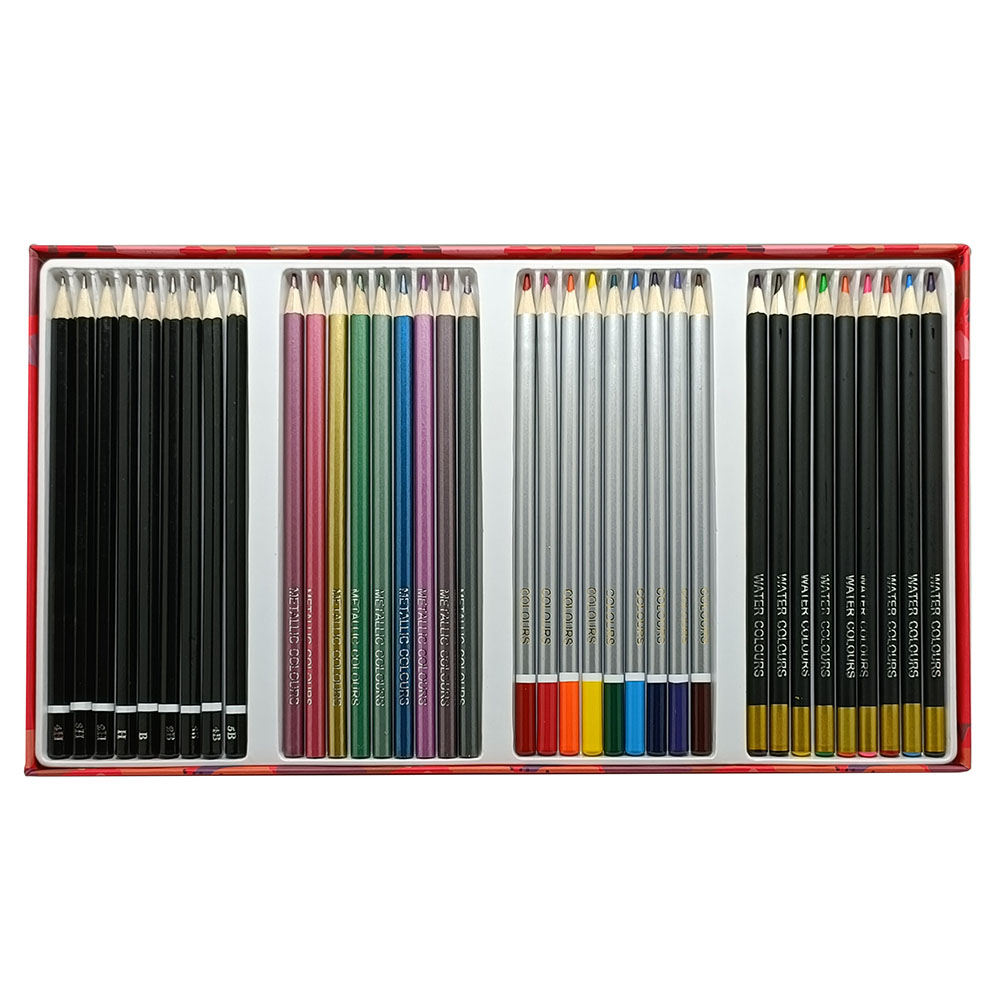
To determine which Color Pencils are truly superior, it is necessary to understand their internal structure. Every colored pencil consists of three essential components: pigment, binder, and casing.
Pigment is the substance responsible for color. High-quality pencils contain finely milled pigments in higher concentrations, resulting in stronger saturation and better coverage. Professional-grade pencils prioritize lightfast pigments to prevent fading under UV exposure.
Binder determines how pigment adheres to paper. Most Color Pencils fall into two main categories:
- Wax-based
- Oil-based
Wax-based pencils typically provide softer laydown and easier blending but may suffer from “wax bloom,” a cloudy surface film that can appear over time. Oil-based pencils use vegetable oils or synthetic binders that create firmer cores, greater point retention, and improved layering control.
The casing, usually cedar wood or sustainably sourced alternatives, affects sharpening precision and durability. Premium brands now emphasize FSC-certified wood to meet environmental standards.
Types of Color Pencils and Their Professional Applications
Understanding pencil types helps match tools to artistic objectives.
- Wax-Based Color Pencils
Wax-based pencils dominate the consumer and student markets, but professional variants also exist. They are known for smooth application, vibrant layering, and ease of blending. Their softness allows for quick coverage, making them suitable for illustration and expressive artwork.
- Oil-Based Color Pencils
Oil-based pencils provide firmer cores and sharper points, making them ideal for detailed work such as architectural rendering or wildlife realism. They resist breakage and allow for controlled layering without wax buildup.
- Watercolor Color Pencils
Water-soluble pencils function both as drawing tools and watercolor media. When activated with water, pigments dissolve and spread like traditional watercolor paint. These are particularly popular among travel sketch artists and mixed-media practitioners.
- Pastel and Specialty Pencils
Pastel pencils combine chalk-like softness with pencil precision. Metallic and neon variants are designed for specialty effects.
The following table summarizes core differences:
| Type | Core Texture | Best For | Blendability | Dauerhaftigkeit |
| Wax-Based | Soft | Illustration, layering | High | Moderate |
| Oil-Based | Firm | Detail work, realism | Controlled | High |
| Watercolor | Medium | Mixed media | High (with water) | Moderate |
| Pastel | Very soft | Soft shading | High | Low |
Key Factors to Evaluate When Buying Color Pencils in 2026
Choosing the best Color Pencils requires attention to technical metrics rather than brand reputation alone.
- Lightfastness Ratings
Artists creating gallery or commission work must prioritize ASTM lightfast ratings. Ratings I and II indicate excellent permanence. Lower ratings may fade under UV exposure within years.
- Pigment Load and Saturation
High pigment concentration ensures vibrant color with minimal pressure. Lower-quality pencils rely on fillers, reducing intensity.
- Core Strength and Break Resistance
Professional pencils undergo advanced bonding processes to reduce internal fractures. Drop resistance is particularly important for studio durability.
- Layering Capacity
Layering refers to how many pigment applications paper can hold before saturation. Oil-based pencils typically allow more layers before surface burnishing occurs.
- Ökologische Nachhaltigkeit
In 2026, eco-conscious production has become a key buying factor. FSC-certified wood, non-toxic binders, and recyclable packaging influence purchasing decisions.
Comparative Technical Evaluation of Leading 2026 Professional Sets
Below is a performance comparison framework for evaluating premium Color Pencils:
| Feature | Premium Wax-Based | Premium Oil-Based | Professional Watercolor |
| Lightfastness | High (ASTM I-II) | Very High (ASTM I) | High |
| Core Hardness | Soft | Firm | Medium |
| Layering Depth | Moderate | Excellent | Moderate |
| Wax Bloom Risk | Possible | None | None |
| Ideal User | Illustrators | Realists, detail artists | Mixed-media artists |
Rather than focusing on brand marketing claims, artists should evaluate sets based on these objective criteria.
Performance Testing: Blending, Burnishing, and Surface Behavior
Professional artists often test Color Pencils using standardized paper weights such as 300gsm cotton paper or hot-pressed illustration board. Performance is measured through:
- Smoothness of laydown
- Blend consistency
- Resistance to wax bloom
- Pigment opacity
- Color shift under UV simulation
Burnishing—applying heavy pressure to compress pigment layers—reveals binder quality. Inferior pencils show streaking or uneven shine, while premium options maintain smooth saturation.
The Role of Color Pencils in Professional Art Disciplines
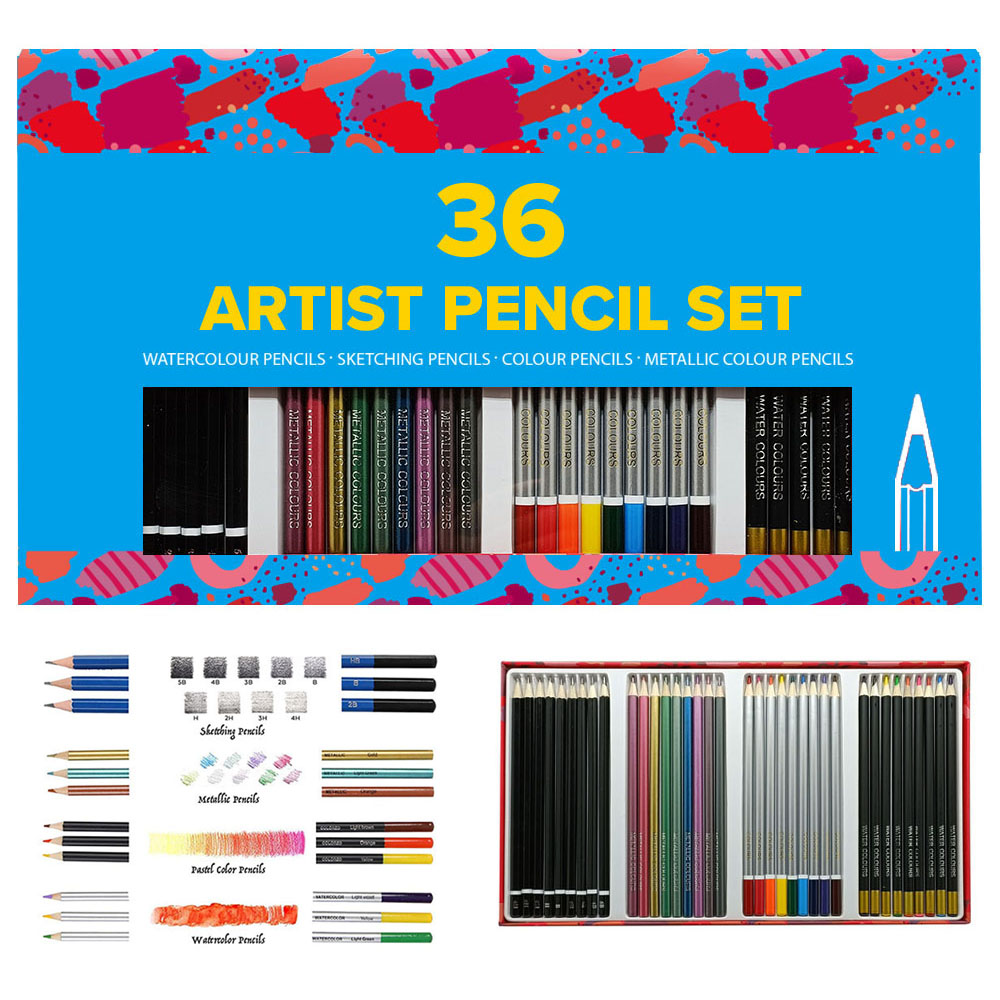
Color Pencils are widely used in:
- Botanical illustration
- Wildlife art
- Fashion design rendering
- Product design sketches
- Architectural visualization
- Concept art
Their precision allows artists to build gradual tonal transitions, crucial for realism.
In commercial illustration, color pencils remain relevant for editorial and packaging prototypes before digital finalization.
Trends in Color Pencil Manufacturing in 2026
The industry that produces color pencils is evolving quickly in response to environmental concerns, automation, educational demand, and professional expectations. In 2026, manufacturers will concentrate on improving the material composition, increasing production efficiency, and achieving a premium performance difference.
- Sustainable raw materials and environmentally friendly certification
Environmental responsibility is now mandatory.
Key accomplishments in 2026:
- FSC-certified trees and logs of cedar and basswood
- Increased popularity of environmentally friendly and biodegradable packaging
- Water-based, low-VOC coatings
- Non-toxic, heavy-metal-free colorants that are compliant with EN71, ASTM D-4236, and CPSIA
Manufacturers that are targeting export markets, especially European and American manufacturers, are focusing on documentation and traceability systems.
- Innovative Pigment Technology
The differentiation of performance is now driven by the pigment.
emerging patterns:
- Increased lightfastness for professional-quality crayons
- Small pigments that are dispersible in the air to enhance the color of water
- Increased blending and layering effectiveness
- Reduced the amount of wax in superior wax-based crayons
Professional and semi-professional markets are demanding greater consistency in color across batches of artists’ grade products.
- Automation and Smart Manufacturing
Efficiency and consistency are crucial to competitive advantage.
Technology enhancements include:
- CNC precision wood slicing and stroking
- Automated systems that lead the way and align with other systems
- AI-powered detection of defects in the core of the center
- Automated packaging machines
Smart factory integration involves:
- Real-time production oversight
- Lower dependence on labor
- Less waste material
- Constant accuracy in dimensional measurement
For OEM/ODM providers, automation increases the scalability of large international orders.
- Customization and Private Label Development
Private-label color pencils will expand further in 2026.
B2B buyers are increasingly concerned with:
- Custom coloring and writing
- Tins, tubes, and gift sets with names
- Temed educational products
- Eco-friendly packaging solutions
Fabricantes with versatile MOQs and in-house design teams have an advantage in competition.
- Hybrid and Specialty Pencil Evolution
Product innovation is now expanding past the traditional boundaries of wax and oil-based media.
Celebrated specialty types:
- Watercolor crayons with increased water solubility
- Metallic and pastel-based core crayons
- Skin tone inclusive packages
- Triangular or Jumbo design for ergonomic children
The educational sector and adult coloring markets are still significant forces.
- E-commerce and Direct-to-Consumer Impact
Even companies that are B2B in nature are affected by the online retail movement.
Now, manufacturers are considering:
- Pricing and packaging that are ready for the retail market
- The beauty of the online marketplaces
- Small-scale production that is flexible for emerging brands
This shift has an effect on both production planning and design development.
Choosing the Best Color Pencils by Skill Level
- For Beginners
Student-grade wax pencils offer affordability and smooth application but may lack long-term lightfastness.
- For Intermediate Artists
Mid-range oil-based pencils provide better control and layering performance.
- For Professionals
High-end sets with full ASTM certification and extended color ranges deliver gallery-quality results.
Storage, Maintenance, and Longevity
Effective storage and care extend the life of the product and maintain its capabilities.
- The ideal conditions for storage are described as follows:
Colored pencils should be kept in:
- Cool, dry environments (15-25°C is recommended.
- Low humidity (less than 60%)
- Aboard a vessel in the dark
Overheated cores may melt the plastic-based shells, while high moisture can cause the wooden barrels to stretch.
- Avoiding the Core Disaster
The core of the book is often damaged by:
- Poor temperature control of the storage system
- Incorrect transportation procedure
- Poor quality of the bond between wood and lead.
Best methods of practice:
- Use padded cases for storage
- Avoid collisions or droplets
When storing crayons, try to do so in a horizontally-oriented manner.
For companies that make products, quality control of the core during centering and bonding is crucial to decreasing complaints of breakage.
- Sharpening and Maintenance of the surface
Sharpening has a significant impact on the longevity.
Recommendations:
- Utilize sharp blades of high quality.
- Avoid over-rotation during the sharpening process.
- Clean the slate frequently to avoid obstruction
- Dull sharpeners lead to wood stripping and core puncture.
- Wax Bloom Avoidance
Wax bloom is similar to a white coating on overly complex drawings.
Prevention methods include:
- Preserve artworks in environments with low moisture content.
- Gently scrape the surface with a soft cloth.
- Use a fixative-based spray to preserve professionally.
Premium products in 2026 will increasingly address the issue of wax bloom during the manufacturing process.
- Extended shelf life
When kept properly, high-quality color pencils can last:
- 5-10+ years with no performance loss.
- Even longer for oil-based creams.
For retailers, properly storing goods ensures:
- Lower rates of return
- Increased customer satisfaction
- Maintained product quality
Frequently Asked Questions (FAQ)
Q1: Are oil-based Color Pencils better than wax-based ones?
Oil-based pencils offer superior layering and durability, but wax-based pencils provide smoother blending. The best choice depends on artistic goals.
Q2: What does ASTM lightfast rating mean?
ASTM ratings measure pigment resistance to fading under UV exposure. Ratings I and II are considered professional-grade.
Q3: Do professional artists still use Color Pencils in 2026?
Yes. Many fine artists and illustrators rely on color pencils for precision and archival stability.
Q4: How many colors do professionals need?
While 72–120 colors are sufficient for most work, advanced artists often prefer sets exceeding 150 colors for expanded tonal control.
Q5: Are expensive Color Pencils worth the investment?
For professional or archival artwork, higher pigment quality and permanence justify the cost.
Conclusion: What Defines the 2026 Best Color Pencils for Artists?
The best Color Pencils in 2026 are defined not by brand prestige but by measurable performance: high pigment concentration, ASTM-certified lightfastness, durable core engineering, sustainable sourcing, and superior layering capacity. Whether wax-based, oil-based, or watercolor, premium pencils offer unmatched control for fine detail and expressive shading.
As the art supply industry continues evolving, artists must evaluate tools through both scientific standards and practical testing. By understanding binder composition, pigment permanence, and ergonomic design, professionals can select Color Pencils that align with their creative vision and archival requirements.
In a digital world, analog excellence endures. And for artists seeking precision, versatility, and tactile engagement, Color Pencils remain an essential medium—refined, sustainable, and more advanced than ever in 2026.